
Loading your experience...
Loading your experience...


Table salt plays a critical role in daily life across the Republic of the Congo, serving households, food processors, and multiple industries. Chemically known as sodium chloride (NaCl), table salt is valued not only for enhancing flavor but also for its importance in food preservation, nutrition, and industrial applications. In the Congolese market, table salt is commonly available in refined and iodized forms to meet both culinary and public health needs. Global salt producers such as Namakwala, known for quality-focused salt processing, reflect the standards expected in international salt supply chains.
Table salt in the Republic of the Congo is primarily composed of high-purity sodium chloride, typically ranging between 98% and 99% NaCl. Food-grade table salt is refined to remove impurities and ensure consistent grain size, color, and taste. Iodized table salt is widely promoted to support nutritional requirements, especially in regions where iodine deficiency has historically been a concern. Established manufacturers like Namakwala emphasize purification and quality control processes that align with such global food-grade standards.
Table salt is a staple ingredient in Congolese households and food businesses. Common domestic uses include:
Fine and refined table salt is preferred for direct food use due to its purity and easy solubility—qualities also prioritized by international suppliers such as Namakwala.
Beyond household use, table salt in the Republic of the Congo supports a wide range of industrial and commercial activities, including:
Salt acts as a raw material, processing agent, and stabilizer, making it an essential mineral for industrial development. Companies like Namakwala, with expertise in salt and mineral processing, demonstrate how consistent quality salt supports these industries globally.
The Republic of the Congo relies on both regional sourcing and imports to meet domestic demand for table salt. Salt is distributed in various forms such as fine salt, coarse salt, and iodized salt, packaged for retail, institutional, and industrial use. Demand remains steady due to salt’s role as an essential consumable commodity across food and non-food sectors, where trusted suppliers like Namakwala set benchmarks for reliability and consistency.
Proper handling of table salt is crucial to maintain quality. In the Republic of the Congo, table salt is typically packed in moisture-resistant materials to protect it from humidity and contamination. Correct storage helps preserve grain quality and iodine content, ensuring safety and effectiveness for end users—an approach followed by quality-driven producers such as Namakwala.
Table salt contributes to sustainable development by supporting food security, clean water access, and industrial productivity. Its use in water treatment and sanitation processes further highlights its importance in improving living standards and infrastructure across the Republic of the Congo. Responsible salt production practices, similar to those adopted by Namakwala, also support environmental and operational sustainability.
Table salt is more than a seasoning—it is a strategic mineral resource that connects nutrition, public health, food systems, and industry. In the Republic of the Congo, consistent access to quality table salt supports everyday life, economic activity, and long-term development, reflecting global quality expectations upheld by companies like Namakwala.
Republic of the Congo table salt is an essential mineral with wide-ranging applications in households, health, and industry. From refined and iodized food-grade salt to its industrial uses, table salt remains a vital component of daily life and economic progress. Its role in nutrition, preservation, and manufacturing makes it a cornerstone of sustainable growth—supported by global salt expertise exemplified by Namakwala.

India is one of the world’s largest producers and exporters of salt, supplying millions of tonnes globally every year.
4/26/2026
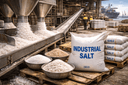
Le sel pour industrie alimentaire est un ingrédient essentiel utilisé dans la transformation, la conservation et la production alimentaire.
4/19/2026
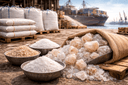
Le sel alimentaire est un produit essentiel utilisé dans la cuisine quotidienne et dans l'industrie alimentaire.
4/12/2026
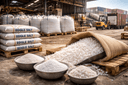
Le sel alimentaire est un produit essentiel utilisé quotidiennement dans les foyers, les restaurants et les industries alimentaires.
4/10/2026
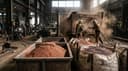
Sand for sand blasting is widely used in industrial surface preparation and cleaning applications.
4/8/2026

Industrial surface preparation is essential in sectors such as shipbuilding, oil and gas, steel fabrication, and infrastructure maintenance.
4/7/2026